
How To Cook In The Dark

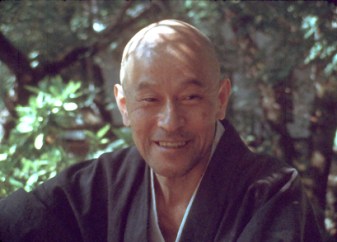
Suzuki Roshi said that Zen is like feeling your way along in the dark. I think this means – go slowly, go carefully. Keep all your senses open, feel your way with tenderness. Pay more attention to where you are now rather than focusing on the destination.

I’ve been hibernating of sorts lately and not doing much, or so it would appear. This is not that typical of me really, I am often more of a “get out of my way I have somewhere I need to be!” type of person, and how different it feels to take tiny steps (or no steps) instead of rushing forward. I can’t really say I am able to see any progress at all.

There is an expression in Zen – take off the blinkers and take off the saddle bags; i.e.  you’ve arrived. Unpack. There is no further destination to focus on, your belongings can spill out of the saddle bags. Sit still. Take a look at what you’ve got. What serves you? What might actually be unnecessary baggage?

Cooking wise, I’ve been loving Emma Galloway’s latest book A Year In My Real Food Kitchen and have made many successful meals, led by her hand. It can sometimes feel too much of a stretch to try out brand new recipes when we’re low on energy, doubtful, but I also find that following the guidance of someone you trust feels very supportive, a way of being kind to yourself.


Continue reading “How To Cook In The Dark”

Beauty is life unveiled

In The Prophet, Kahlil Gibran wrote “beauty is life when life unveils her holy face. But you are life and you are the veil”

Winter in NZ is just as beautiful as any other season, and with some time off work I find myself nourished by beauty, along with a feeling that I have been in a beauty-drought for some time (although actually I have just been too distracted, too veiled, to notice it.)

When I pause to appreciate and even celebrate beauty – in nature, in art, in music, in people, then I relax a little more, feel more connected, feel more joyful. So how to connect with the beauty of this life without getting all graspy?

Continue reading “Beauty is life unveiled”

Matariki – happy new year!

In the Māori language, Matariki is the name of the Pleiades Star Cluster, and, the season of it’s rising which happens in NZ’s mid-winter. For many Māori, it heralds the beginning of a new year. Traditionally, Matariki is the time to ‘prepare the ground’ for the coming season, but the emphasis actually is on our inner ground – it’s a time to seed our own intentions, re-connect with old skills, and set new goals.

The three lovely parts of this can be to; first practise being present. Secondly, reflect on your purpose, what’s important to your being, and re-orient yourself as necessary. And lastly, give thanks and feel gratitude for the privileges and blessings in our lives.

When times are tough it doesn’t come easily to have these kind of positive reflections, but today I just did a simple mindfulness of breathing practise, and ended with some gratitude, and it really re-charged me. The line from the William Stafford poem ‘Cutting Loose’ came to me – “Sometimes from sorrow, for no reason, you sing”.

I have spent the last 2 weeks cooking for back to back retreats at Wangapeka. It’s a beautiful place any time of year but MY GOD it was cold at night! When I look back now at the quickly snapped photos I took of some of the meals, I’m kind of stunned how colourful everything was. Even in the ‘bleak mid-winter’, there were bursts of rainbow colours in every meal, and heaps of gorgeous sunrises and sunsets. Always something to smile about seems to be the message.

I didn’t get a picture of our Ginger-Roasted-Pumpkin à la Emma Galloway, but here is the link to her site with the recipe and some gorgeous pictures. She serves it muddled with quinoa and herbs, but on this retreat I served it with couscous and all the beautiful rainbow chard shown above. Perfect winter lunch.

I sign off with William Stafford’s poem, and all my best wishes for the new year. May all beings be happy.

Sometimes from sorrow, for no reason,
you sing. For no reason, you accept
the way of being lost, cutting loose
from all else and electing a world
where you go where you want to.

Arbitrary, a sound comes, a reminder
that a steady center is holding
all else. If you listen, that sound
will tell where it is, and you
can slide your way past trouble.

Certain twisted monsters
always bar the path—but that’s when
you get going best, glad to be lost,
learning how real it is
here on the earth, again and again.


Earthquake! Tornado! Armaggedon! 

It could happen any time.

Earthquake, tornado, Armageddon.

It could you know.

Or: sunshine, love, salvation.

It could happen.

That’s why we get up in the morning and look out.

There are no guarantees in this life.

But there are some bonuses.

Like morning, like noon. Like right now.

Two days before my partner and I were about to head off for a month-long holiday in Indonesia, we both had the same question arise in our minds – why? Continue reading “Earthquake! Tornado! Armaggedon! “

Pure & Perfect Soup, The Great Teacher

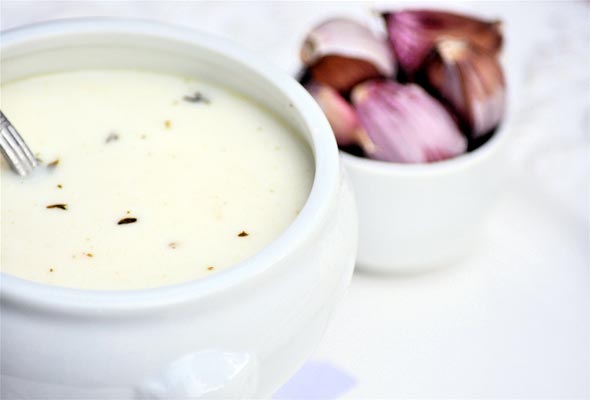
I’m going to share with you an old Italian soup recipe. It has only 5 simple ingredients and simmers for just 10 minutes. It costs less than a dollar per serving, yet is a life-changer! What are your expectations? I came across it on Food52 who labelled it ‘genius’ – opinions are divided.

The recipe is credited to the father of the legendary, Italian-American cookery writer Marcella Hazan. Marcella was born in 1924 in northern Italy, so we can confidently say that this recipe belongs to a certain era and tradition. It’s said, that from necessity as well as inclination, Marcella’s father, Giuseppe, was an extremely frugal cook. At the time, apparently the most expensive ingredient in this soup was the salt. The context is important and should be taken into consideration before we judge it.

Or on the other hand, we could decide to not judge it. We could just cook it and offer it with love and sincerity. Receive it with love and sincerity. Maybe it’s a bit bland, or maybe it’s heavenly, but we are a step closer to magnanimous mind. But it’s soooo hard not to judge, isn’t it?

In the Tenzo Kyōkun, Zen Master Dōgen taught that we should handle all food with respect, as if it were to be used in a meal for the emperor. ‘A dish is not superior because you have made it with choice ingredients, nor is a soup inferior because you have made it with ordinary greens,’ Dōgen teaches. Why is this attitude so important?

Continue reading “Pure & Perfect Soup, The Great Teacher”

The Story of a Cake

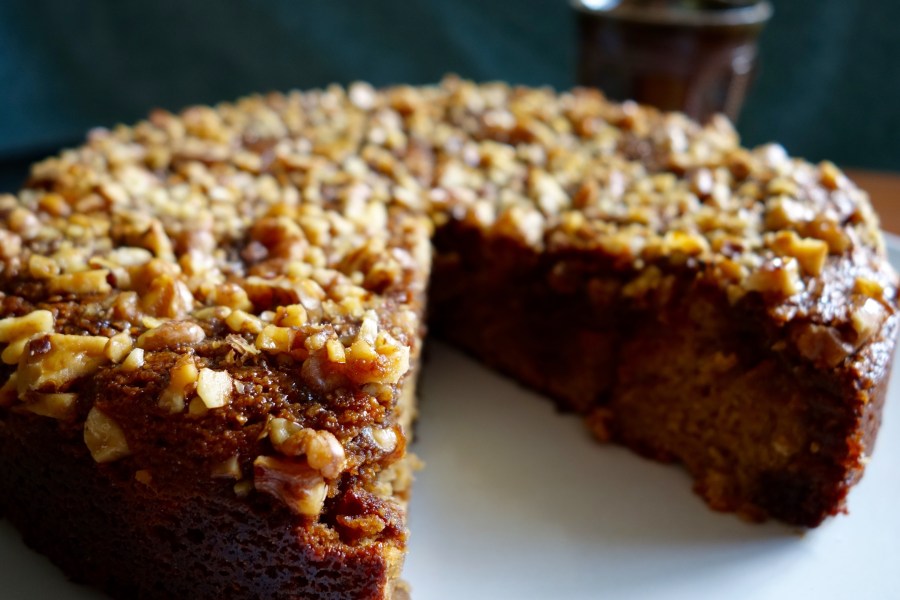
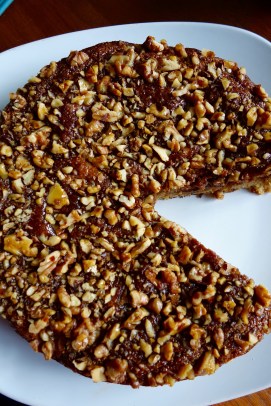
Here’s my gluten free coffee and walnut cake. It’s more than just a cake; it’s a trip down memory lane. It starts at a  cafe called UMU that I used to go to weekly up in Coromandel Town when it was my day off from cooking at the beautifully remote Mahamudra Retreat Centre… and takes in Milwaukie and NYC. Here’s the story;

A week ago, On Food52, I came across this recipe for a gluten free cake based on coconut flour and ground almonds. I’m always on the look out for GF cakes as I often cook for groups which inevitably these days include one or more people who say they are GF. The Food52 author, posting from New York, quite generously admitted that she took it from the back of a packet of Bob’s Red Mill Almond Flour (based and milled in Milwaukie)! I baked it a few days ago and thought the texture was brilliant, but it lacked oomph. (On the other hand, if you’re after a GF cake that tastes like cake – butter, sugar, eggs and hint of vanilla – here it is!!)

Then today, the memory of UMU’s cake that I used to adore, surfaced. It was a coffee syrup cake, loaded with chopped walnuts, amazingly moist and more-ish. I’d tried before to replicate it, but never with success. Until today!

The Bob’s Red Mill recipe calls for butter, but here I swapped that for coconut oil, and added the coffee and walnut elements, plus a wisp of cardamom. And Bob’s your uncle!

So… whose cake is it?!

Gluten Free Coffee & Walnut Cake

Ingredients

4 double shots espressoDSC02540

3/4 cup castor sugar, divided

3/4 cup of coconut oil

3 eggs

1/4 cup yoghurt (or milk, or dairy free milk)

1.5 cups ground almonds

1/2 cup coconut flour

2 tsp ground cardamom

2 tsp baking powder

large handful chopped walnuts

Method

Heat the oven to 160c, and line a 22cm cake tin.

Make the coffee syrup by heating the espresso in a small pan on the stove with 1/4 cup sugar. Simmer until sugar has dissolved. Let cool.

Melt the coconut oil, then in a food processor blend with 1/2 cup castor sugar until well combined. Add the eggs, one at a time, then 1/4 cup of the cooled coffee syrup and the yoghurt. Mix well.

In a separate bowl, mix the almond flour, coconut flour, baking powder and ground cardamom. Add the dry ingredients to the wet, and stir in.

Scrape into your lined tin, and sprinkle over the chopped walnuts. Bake in a pre-heated oven (160c) for around 50 mins until a skewer comes out clean. Pour the remaining coffee syrup over the hot cake, and let it cool in the tin – this cake is deliciously moist! Store in refrigerator – it gets even better the second day. I liked it with a dollop of yoghurt on the side.

Thank you UMU – where it all started?

umu


Step Away From The Recipes!

Rolling around my mind this week are two dharma stories. First, this line from Suzuki Roshi, who was commenting on how he got to a place with his American students at Tassajara where he didn’t want to give so many formal teachings. “It’s like giving you a recipe” he said to one student, “it doesn’t work. You cannot eat a recipe”. Instead he emphasised practise – zazen – living and working together, and investigating things for oneself.

When I began cooking, back in my late teens, I would come across a recipe that appealed, try it once and if it ‘worked’ and was tasty and enjoyable I would faithfully copy it down. If I wasn’t impressed by the result, it would be discarded and forgotten. I thought this was an absolutely acceptable and sensible way of ‘learning to cook’. But how much was I really learning, or was I just collecting recipes? Now when I look back at how I ‘learnt to cook’ I realise I wasn’t learning much at all. Which is the same mistake we can make with dharma too, memorising complex doctrinal teachings and profound buddhist psychology, without deeply knowing what we are knowing. Although of course, we all need to start somewhere.

suzuki2I think most of us study Buddhism like something already given to us. We think that what we should do is preserve the Buddha’s teaching, like putting food in a refrigerator. We think that to study Buddhism is to take the food out of the refrigerator. Whenever you want it, it is already there. Instead, Zen students should be interested in how to produce food from the field, from the garden, should put the emphasis on the ground. If you look at the empty garden you won’t see anything, but if you take care of the seed it will come up. The joy of Buddhism is the joy of taking care of the garden – Suzuki Roshi.

Continue reading “Step Away From The Recipes!”

The Perfect, Elusive Loaf

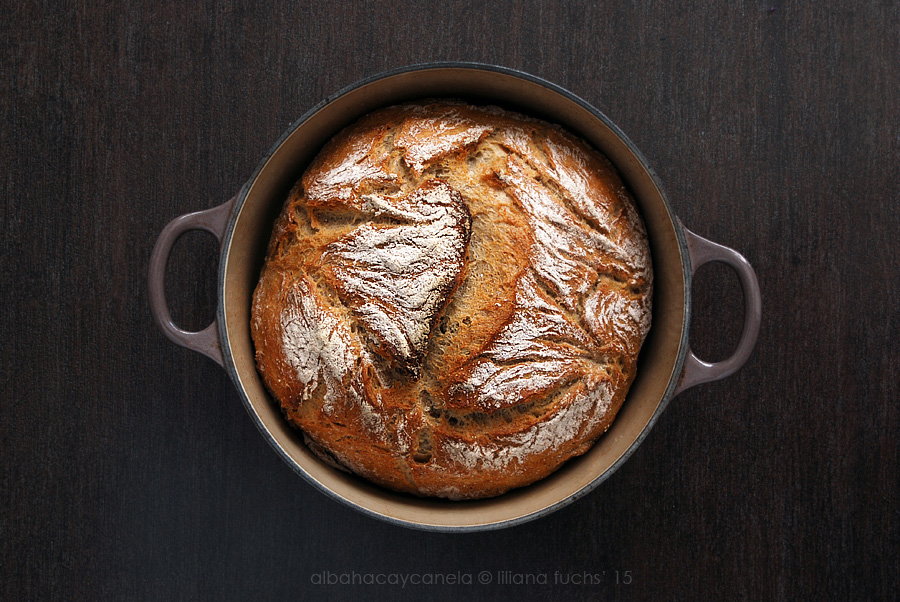
I came across this bread recipe last week, courtesy of Jim Lahey of New York’s Sullivan Street Bakery. Apparently it produces the most perfect loaf of bread, despite no special ingredients, techniques or skills. You don’t even have to knead it! They say even a 4-year-old could make it, and it’s got 5-star reviews by 1,286 people. It looks absolutely amazing, and I couldn’t wait to give it a go.

I’ve tried it 3 times already, and it’s been a failure each time.

Am I using stale flour? The wrong type of yeast? Maybe the recipe is missing some instructions… it must be Jim’s fault. Or maybe I’m using the wrong cooking vessel, the wrong temperature water? Am I trying too hard?! Not practising enough?

Why does something so seemingly obvious, simple and effective elude us?

I must just be my karma…. the conditions aren’t right…. I’ll keep trying.


(Bread photo by Liliana Fuchs)

Just Cut The Carrots!

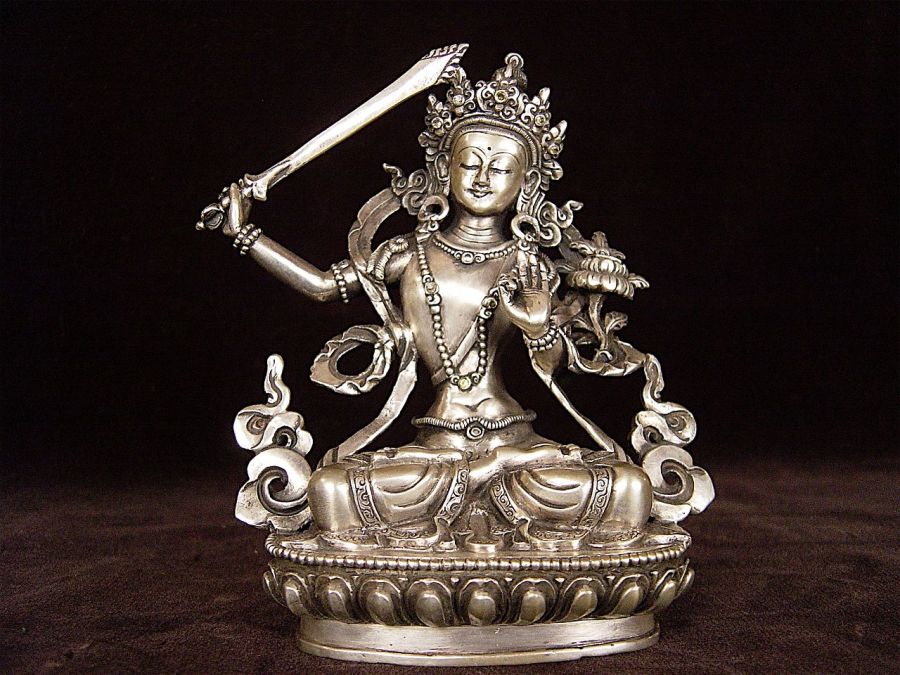
An old Zen story: One day, Wuzhaon was working as the cook at a monastery in the Wutai Mountains. Whilst cooking rice, the Bodhisattva Mañjuśri, (the Deity representing Wisdom, pictured above) appeared above the cooking pot… and Wuzhaon beat him! Later Wuzhaon said ‘Even if Shakyamuni [Buddha] were to appear above the pot, I would beat him too!’

This seems such a crazy story, but I’ve come to take it as a teaching that reminds us to pay attention to just what we are doing. If I am in the kitchen and my job is to prepare lunch, then nothing should distract me – not even the appearance of the Buddha himself! This story came to mind today, as I was reflecting about a conversation I had yesterday evening with one of the managers at the retreat centre where I’m soon to be working as Cook – the Wangapeka. It seems (again!) that unofficially, cooking isn’t the only task, even for the cook; it’s dealing with the personalities, attachments and desires of the people at the centre.

I wonder how well I will be able to stay focused on cooking, and not be pulled into the worlds and dramas of all the wonderful people who are booked on to this forthcoming retreat?

I very much like another, modern, Zen story which is from the 1960’s and the early days of Tassajara Centre, in California – Edward Espe Brown was appointed as Cook. The Zen Master of course was Suzuki Roshi.

Continue reading “Just Cut The Carrots!”

Why Not Try Something Different?

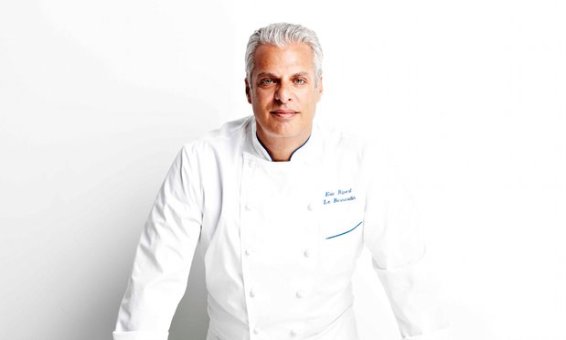
Here is a real gem of an interview. Michelin starred chef Eric Ripert, of New York City’s Le Bernardin which is one of the world’s most prestigious fine dining restaurants, talks here to Guardian Food Writer Joshua David Stein. Talk turns to Ripert’s management style. Ripert was trained in France ‘the traditional’ way, which meant he was humiliated and terrorised by the chefs, who believed you had to break the young recruits before you could rebuild them into champion chefs. Ripert reflects that he too treated his staff this way for years – with shouting, anger, and overbearing control. His moment of realisation came 20 years ago, whilst running the magnificent 400-year old Tour D’Argent in Paris – he was miserable, his staff were miserable and he knew there must be another way. Around this time, he began to study the Buddha’s teachings and took up a daily meditation practise.3744

Now, Ripert says, he doesn’t really get angry, although he does still get frustrated when dealing with young chefs in his brigade who are still honing their skills. Stein wanted to witness how a Buddhist would act in the high pressure environment of a New York professional kitchen at the top of it’s game, so Ripert invited him to come into the kitchen and observe the evening’s service. At one point, Ripert had cause to send back to the station a piece of fish that was not cooked. Stein reports that there was no shouting and no humiliation. Ripert’s gentle but firm intervention guided the young cook. No more, no less. “Kindness” says Ripert later, “does not mean I am going to hug you, it means I am going to guide you”.

Continue reading “Why Not Try Something Different?”